AI Didn’t Replace the People. It Replaced the Repetition

Sofija Mamuchevski
Product & Growth Lead | AI Products | Demos, Outreach, Partnerships
Sofija Mamuchevski is Product & Growth Lead at DocuGenius, where she helps organizations modernize complex document workflows through automation, operational standardization, and compliance-focused processes. With more than 10 years of experience across software development, product management, and Agile delivery, she writes about document automation, operational efficiency, product strategy, and workflow transformation in regulated and document-heavy industries.
Reading time
4 min read
Published
July 21, 2026
IKEA, Walmart, and other leading companies show the real value of AI: not replacing people, but removing repetitive work so teams can focus on judgment, creativity, customers, and higher-value decisions.

IKEA didn’t use AI to remove 8,500 people — it used AI to remove repetitive customer questions and move those people into higher-value design advisory work.
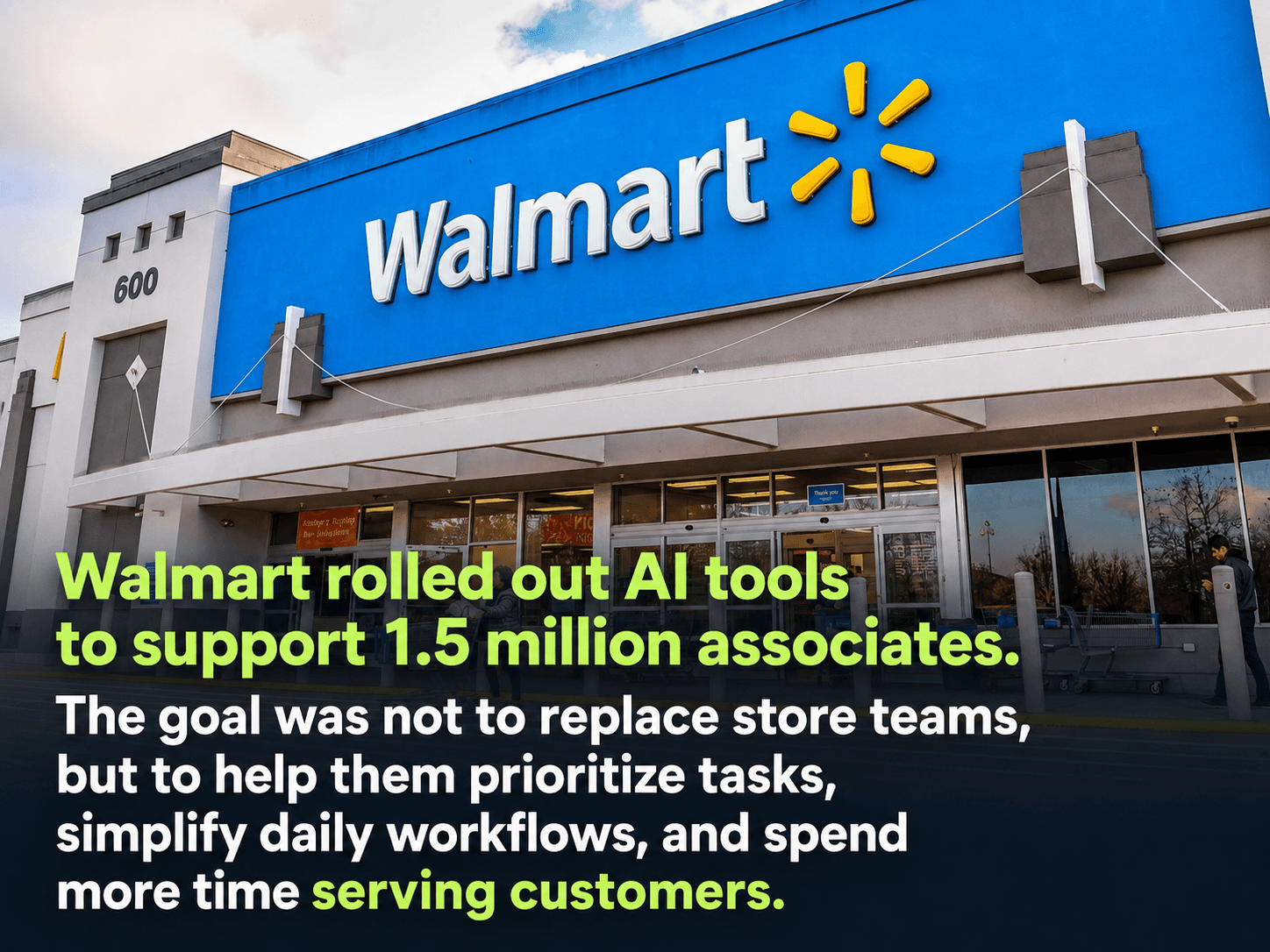
Walmart’s AI tools show the same pattern: support the team, simplify daily workflows, and give associates more time to serve customers.
So what actually happened?
And more importantly, what should every company with repetitive manual work learn from it?
That is what we will break down below.
People are not running out of talent — they are running out of focus:
The problem is not people — it is repetition:60% of the workday is lost to coordination, searching, updates, and other “work about work."
Email alone is stealing serious time: in a 6,000-worker field experiment, generative AI users spent 3 fewer hours per week on email — a 25% reduction. Customer support is already proving the point: Klarna’s AI assistant handled two-thirds of chats in its first month, doing the work equivalent of 700 full-time agents.AI can automate tasks that take up 60–70% of employees’ time, according to McKinsey.
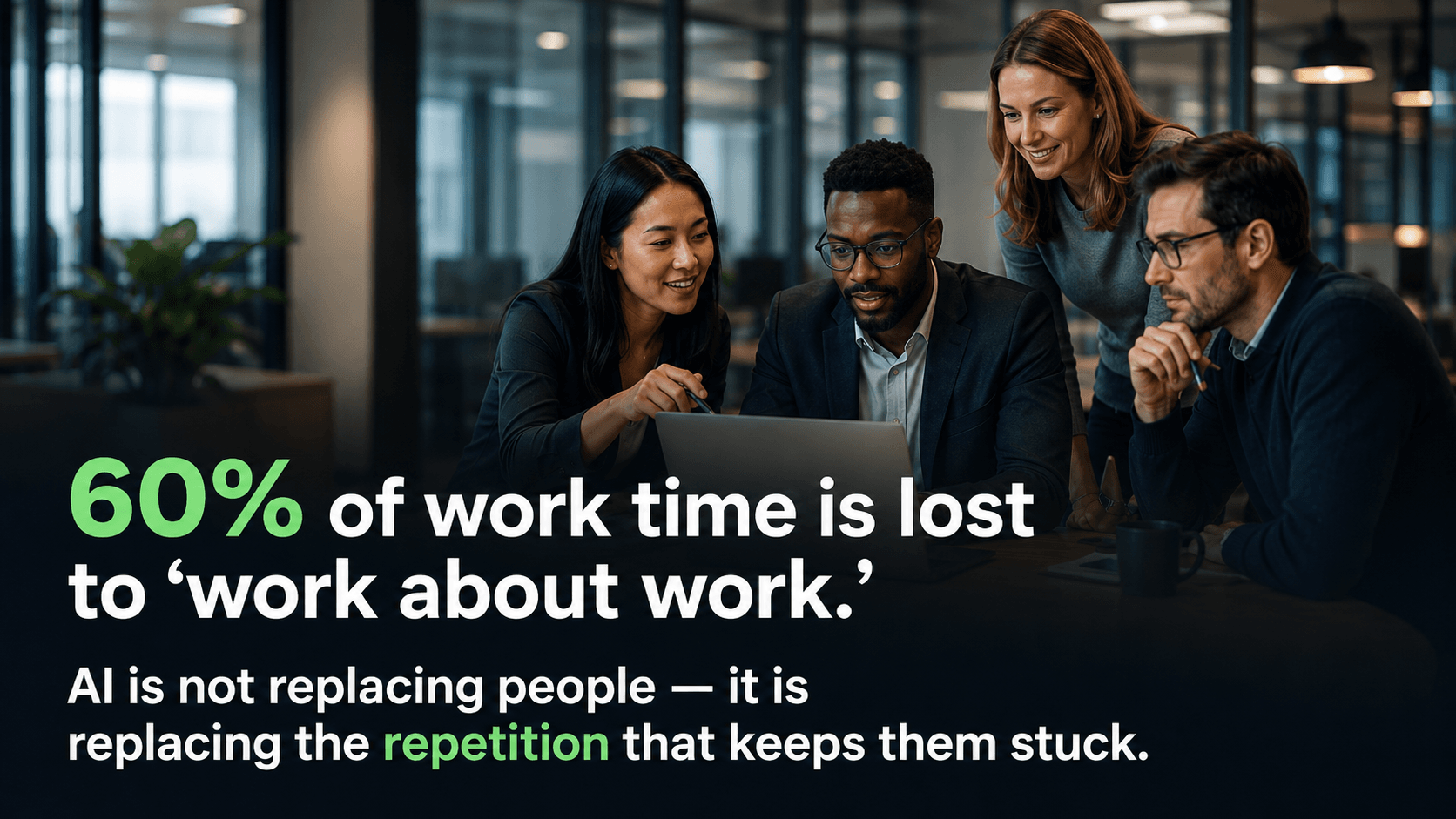
Too many tickets. Too many emails. Too many customer questions. Too many document checks. Too many updates. Too many people spending their best hours on work that does not need their brain.
That is the real problem AI is solving.
Not people.
Repetition.
Repetition Is the Real Problem
Forget the algorithm for a second. What’s actually draining your best people isn’t some machine. It’s the ticket queue, the inbox that won’t quit, the same customer asking the same thing — forty times, every single day — answered over and over by people who could be creating real value elsewhere.
That’s the monster. Not artificial intelligence. Just plain, crushing repetition.
What IKEA Actually Did
IKEA, for example, saw this clearly. Its top franchisee put a chatbot named Billie on the front lines to handle routine questions. Over two years, Billie took care of 47% of all incoming queries to call centers.
Sure, the number grabs your attention. But that’s not the real story.
What matters is what happened next.
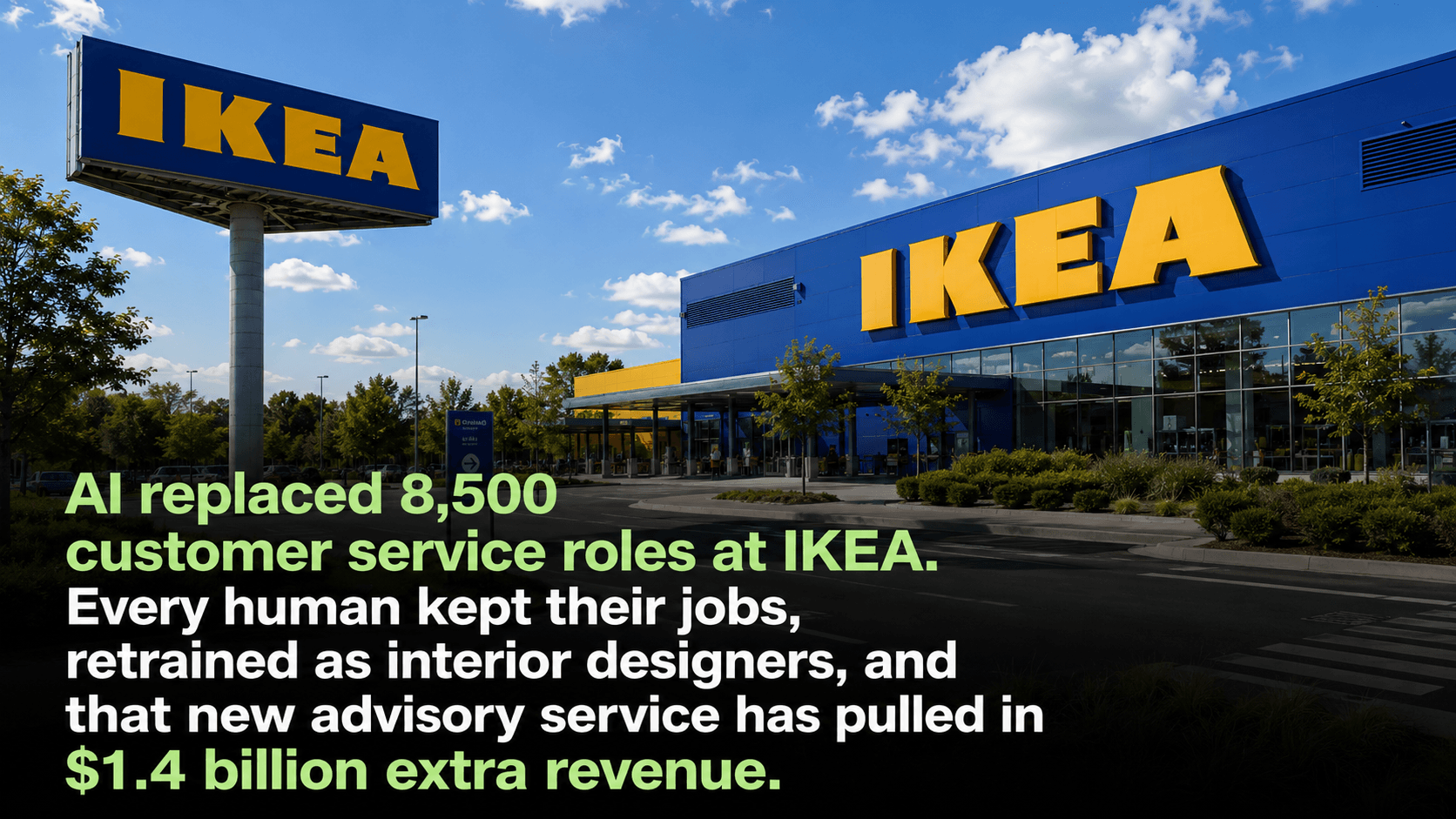
Instead of showing people the door, IKEA retrained 8,500 call-center staff to become interior design advisers. All the tedious, draining questions went straight to AI.
The humans? They moved up — closer to customers, to taste, to creativity, to real conversations that actually matter.
That’s the big idea. That’s the entire point.
AI’s Value Is Not Headcount Reduction
AI’s value isn’t in cutting headcount. It’s in freeing up humans from work that should have been automated a decade ago.
See the pattern everywhere.
Walmart pushes AI tools out to 1.5 million associates so teams can focus on what matters, not get buried in clunky processes.
Morgan Stanley hands meeting notes and follow-up emails off to AI, letting advisors spend more time with clients.
Klarna’s assistant did the work of 700 agents in just one month.
Blackstone puts AI engineers inside business units, building tools for messy data, tedious reporting, and the kinds of operational headaches that actually slow things down.
The Pattern Is Clear
These companies aren’t shopping for software. They’re rethinking work itself.
They’re asking:
Where are we wasting our people’s attention?
Give the repetitive stuff to the machine.
Let people handle judgment, relationships, exceptions, and growth.
AI Won’t Eat Your Job. Repetition Will.
The real AI advantage is not fewer people.
It is fewer people stuck doing work that should already be automated.
IKEA showed it with repetitive customer questions.
Walmart showed it with store workflows.
DocuGenius applies the same idea to document-heavy teams.
Because skilled people should not spend their best hours reading, checking, comparing, validating, and re-checking documents manually.
Let AI handle the repetition.
Let people handle the value.

Sofija Mamuchevski
Product & Growth Lead | AI Products | Demos, Outreach, Partnerships
Sofija Mamuchevski is Product & Growth Lead at DocuGenius, where she helps organizations modernize complex document workflows through automation, operational standardization, and compliance-focused processes. With more than 10 years of experience across software development, product management, and Agile delivery, she writes about document automation, operational efficiency, product strategy, and workflow transformation in regulated and document-heavy industries.